News & insights
The Difference Between a Blog Post, a Service Page and a Landing Page
The Difference Between a Blog Post, a Service Page and a Landing Page
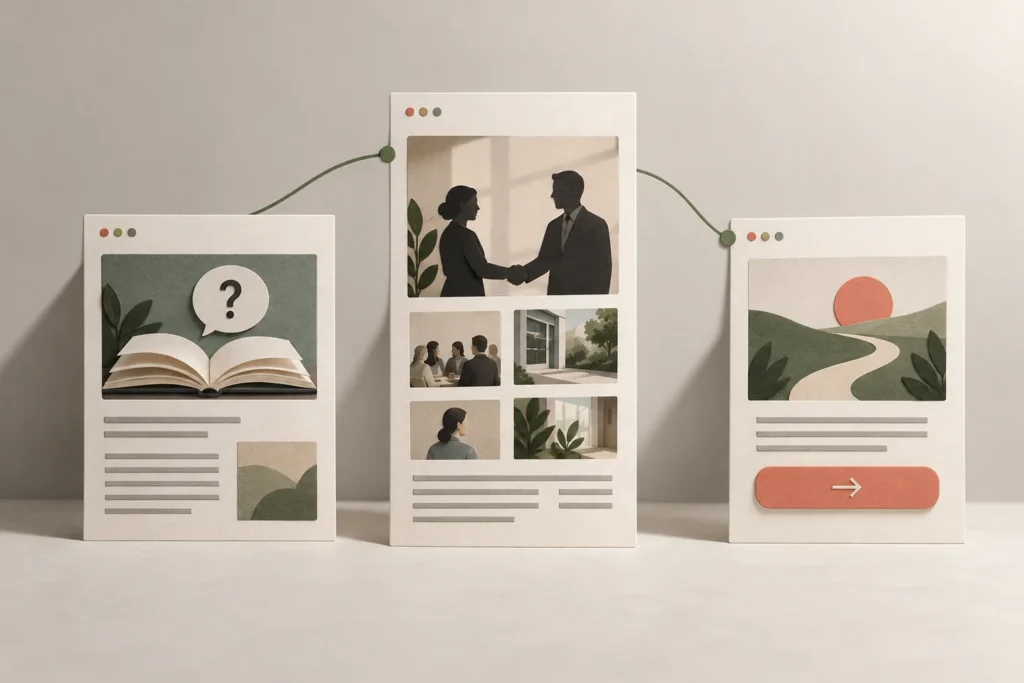
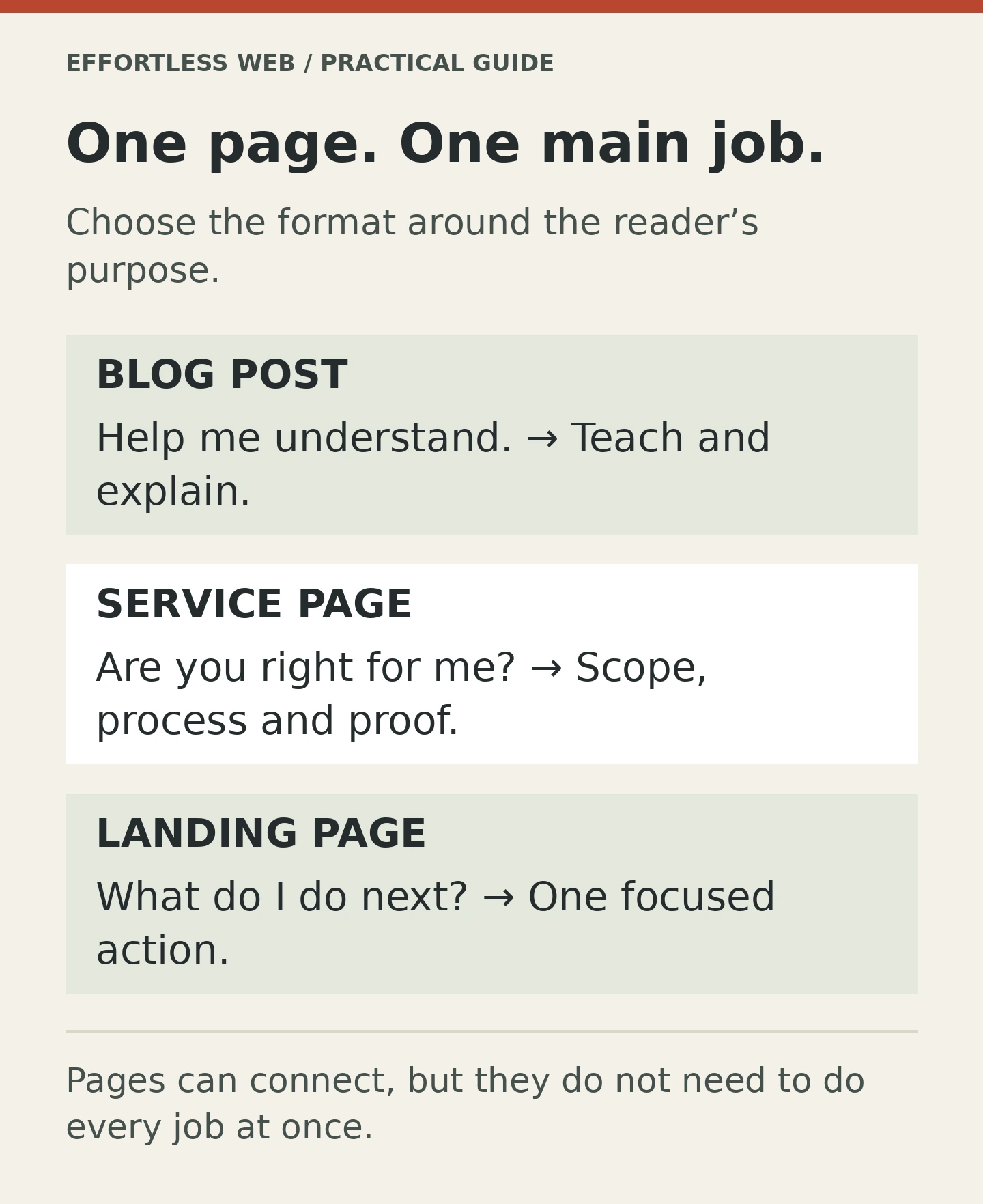
The difference between a blog post, a service page and a landing page comes down to one thing: job description. A blog post helps someone understand a topic. A service page helps someone judge whether the business is the right fit. A landing page helps someone take one focused action.
That sounds obvious, but plenty of websites still blur the lines. They try to make one page do all three jobs at once and end up with something that is neither informative enough to rank well nor focused enough to convert properly.
Once you separate the page types, the site gets easier to plan. The content becomes clearer. The navigation makes more sense. And the reader has a much better chance of landing on the page they actually needed.
The difference between a blog post, a service page and a landing page is intent
Intent is the easiest way to tell them apart.
A blog post is usually for discovery or education. Someone has a question, a problem or a topic they want to understand. The post gives them useful context and, if it is done well, brings them into the site through search or sharing.
A service page is for decision-making. The visitor already knows they need help. Now they want to know what the business does, how it works, who it is for and why they should trust it.
A landing page is for one specific conversion. That might be a quote request, a consultation, a download or a campaign sign-up. The page should keep the reader focused on that single next step.
Google’s SEO Starter Guide is useful here because it keeps the basics simple: make pages clear, useful and easy to understand. The page type should match the user’s purpose, not the other way around.
What a blog post is for
A blog post should teach, explain or explore.
It is the best place for questions like:
- what does this mean?
- how does this work?
- what should I know before I choose?
- what are the common mistakes?
Blog posts are usually the easiest entry point for search traffic because they answer the question a person is already typing into Google. That is why they work well for early-stage research and longer educational topics.
But a blog post should not pretend to be a service page. If it is trying to sell too hard, it can lose the useful tone that made it worth reading in the first place. That does not mean it should hide the business. It just means the main job is to help first.
For Effortless Web, a blog post usually sits beside SEO & Content Marketing and Content Writing. Those pages support the educational content by showing what happens next if the reader needs help.
What a service page is for
A service page has a very different job.
It should explain what the business does in plain language and help the reader decide whether to get in touch. That means the page needs more than a headline and a few vague promises. It needs clear service details, trust signals, proof and a sensible next step.
The best service pages answer questions like:
- What exactly is included?
- Who is this service for?
- What problem does it solve?
- Why choose this business over another one?
- How do I move forward?
This is where many sites go soft. They treat the service page like a brochure and leave out the practical detail. That makes the page harder to trust and easier to leave.
Google’s guidance on creating helpful, reliable, people-first content fits here too. A service page is not supposed to be clever. It is supposed to help someone make a decision.
For Effortless Web, the service page is where Web Design & Development earns its keep. If the page is clear, the reader knows what the business does and whether it is worth a conversation.
What a landing page is for
A landing page is narrower again.
It should focus on one action and remove distractions that get in the way of that action. That is why landing pages are so common in paid campaigns, lead magnets and time-sensitive offers.
Unbounce defines a landing page as a page specifically designed to make a visitor convert. In practice, that means the page is built around one goal, not a full menu of options. A focused page usually converts better because the reader is not being asked to choose from ten different paths.
A landing page can be useful for a consultation offer, a downloadable guide, a special campaign or a specific audience segment. But it should not replace a proper service page. If the page has to explain the whole business, it is probably not a landing page anymore.
Yoast’s site structure guide is helpful here. Good structure makes it easier for people and search engines to know what each page is for. A landing page should be a tight route, not the whole map.
How the three page types should work together
The strongest websites do not pick one page type and force everything through it. They use each page for the job it does best.
A blog post attracts and educates. A service page explains and converts. A landing page captures a specific campaign or offer.
That sequence matters. Someone may first find a blog post, then click through to a service page, then take the next step on a landing page or contact form. If every page is clear about its role, that path feels natural instead of messy.
This is also why content and structure need to be planned together. If a blog post is doing service-page work, or a landing page is carrying all the educational burden, the site usually feels off. The user can tell, even if they cannot explain why.
A useful companion read here is What Google Actually Wants From Helpful Service-Business Content. That piece goes deeper on what makes service pages genuinely useful.
Common mistakes to avoid
Most page-type problems come from one of a few mistakes.
- Using a blog post to sell too hard. The reader came for an answer, not a sales pitch.
- Writing a service page like a blog post. Too much theory and too little practical detail makes the page weak.
- Turning a landing page into a full website page. If the page offers too many exits, the conversion path gets fuzzy.
- Repeating the same message everywhere. The homepage, service page and landing page should not all say the same thing in the same way.
When that happens, the site loses focus. The pages blur together. The content stops pulling its weight.
Better to give each page one clear job and let the site structure do the rest.
A simple way to choose the right page type
Before you write, ask one blunt question: what is the page supposed to do?
If the answer is “teach someone something”, write a blog post.
If the answer is “help someone decide whether to hire us”, write a service page.
If the answer is “get someone to complete one specific action”, write a landing page.
That is the whole test. You can complicate it later if you want, but most good site planning starts right there.
Once you know the page’s job, everything else gets easier: the headline, the structure, the CTA, the links and the tone.
Need help deciding what each page on your site should actually do?
If you want better site structure, clearer page roles and stronger conversion paths, talk to Effortless Web about Web Design & Development or get in touch.