News & insights
What Small Businesses Get Wrong About Keywords
What Small Businesses Get Wrong About Keywords
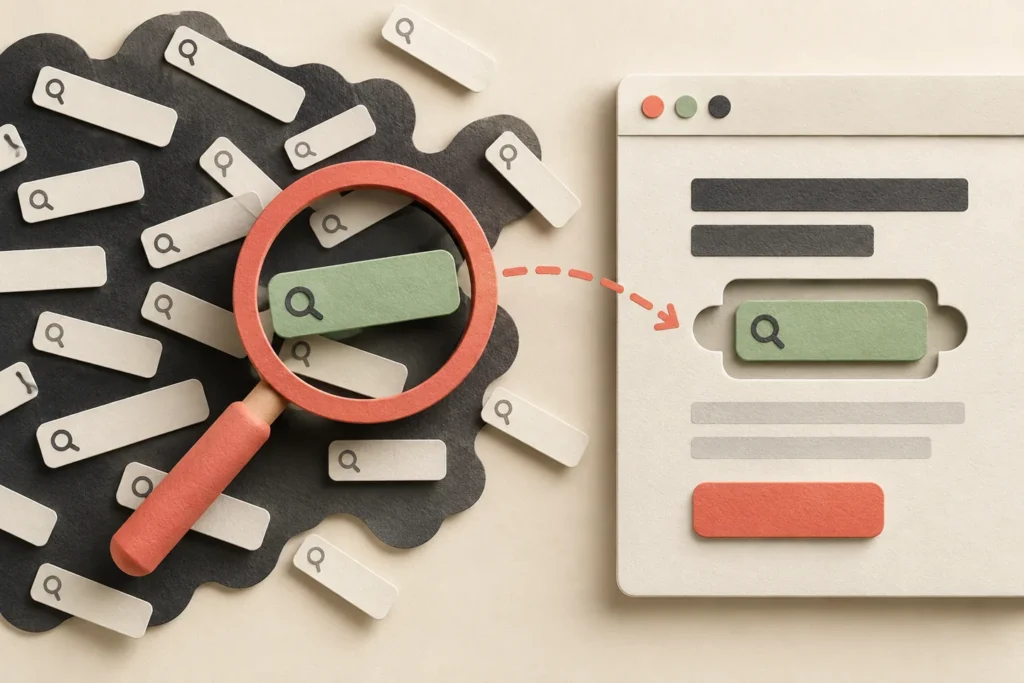
Keywords still matter, but a lot of small businesses use them the wrong way. They chase phrases instead of search intent, stuff the same term into every heading, or pick keywords that sound good in a spreadsheet and never bring in the right enquiries.
The problem is not that keywords are outdated. The problem is that people treat them like magic words. A keyword only helps when it matches the page’s job, the reader’s intent and the service the business actually wants to sell.
Keywords are a starting point, not the strategy
Most keyword mistakes begin with the wrong question. Instead of asking what the reader needs, businesses ask which phrase gets the most traffic.
That can lead to pages that look busy but do not do much. The wording may sound SEO-friendly. The page may even include the right phrase in the title, headings and copy. But if it does not answer the right question, it will still struggle.
Google’s SEO Starter Guide is blunt about the basics: make pages clear, useful and easy to understand. That starts with knowing what the page is for before you worry about the exact phrasing.
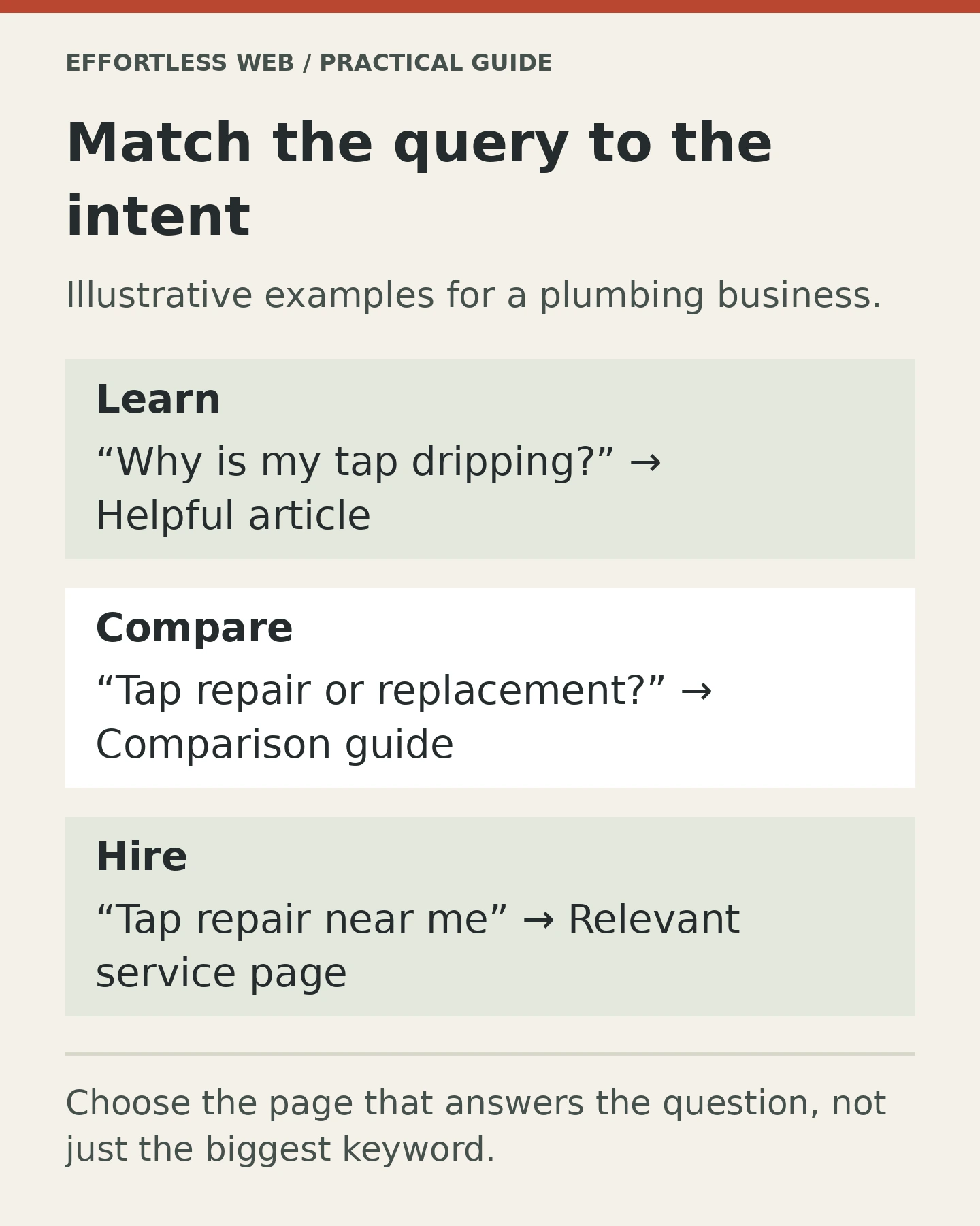
If the page exists to explain a service, the keyword should fit that service. If the page exists to compare options, the keyword should reflect comparison intent. If the page exists to answer a question, the keyword should sound like a real question, not a branded slogan.
Small businesses get keywords wrong when they chase volume
Search volume is useful, but it is not the whole story. A high-volume keyword can be too broad, too competitive or simply wrong for the page you are building.
That is where many small businesses go sideways. They choose a phrase because it looks popular, then write a page around it even if the page cannot really satisfy the searcher. The result is usually vague copy, weak calls to action and poor conversion.
It is better to choose a keyword that matches the business’s actual offer. A smaller, more relevant search may bring fewer visits, but the visitors are more likely to care.
That is especially true for service businesses. A visitor looking for general advice is not the same as a visitor ready to compare providers. The keyword should reflect that difference.
Don’t force exact-match phrases everywhere
Another common mistake is trying to repeat the exact keyword as often as possible. People do this because they think repetition proves relevance. It usually does the opposite.
Search engines do not need to be hit over the head with the same phrase in every paragraph. They need clarity. Natural language does that job better.
Google’s spam policies call out keyword stuffing for a reason. If the page reads like it was written to satisfy a formula, users feel it immediately.
Use the main keyword where it belongs, then support it with related phrases, plain language and examples. A good page sounds like a person explaining a service, not a machine trying to trigger a ranking.
One page should usually have one main keyword theme
Another mistake is trying to make one page do too much work. Businesses sometimes pile five or six keyword ideas into one article or service page because they do not want to miss anything.
That usually weakens the page. If the topic is too broad, the message gets muddy. If the page tries to rank for too many different intents, it often ends up ranking for none of them especially well.
A cleaner approach is to give each page one main job. One service page can focus on one service. One blog post can answer one key question. One landing page can drive one action.
The related post What Google Actually Wants From Helpful Service-Business Content goes deeper on that idea. Helpful content is not just well written. It is useful for the person who landed there.
Use keywords to shape the page, not decorate it
Good keyword work shows up in the structure of the page. The title is clear. The first paragraph explains the point quickly. The headings follow the reader’s questions. The body copy stays on topic.
That is where keywords are most useful. They help you decide how the page should be organised. They are not there to be sprinkled over the top like garnish.
If you are writing for a service business, the page should usually say:
- who the service is for
- what problem it solves
- what the reader should expect next
- why the business is a sensible fit
That structure gives the keyword somewhere to live. It also makes the page easier to read, which is still the part that gets ignored too often.
A simple way to choose better keywords
If you want a practical method, start here:
- Write down the service or topic in plain English.
- Ask what the reader is actually trying to do.
- Match the keyword to that intent, not just to search volume.
- Check whether one page can truly satisfy that intent on its own.
- Use related phrases naturally in headings and body copy.
That is usually enough to avoid the most obvious mistakes. It also keeps the page from drifting into keyword soup.
Keywords should support enquiries, not just rankings
At the end of the day, the right keyword is the one that helps the right person find the right page and take the next step.
That means the page still has to read well. It still has to earn trust. And it still has to make a business case without sounding stiff.
That is why keyword work and content writing belong together. A good keyword helps shape the page. Good writing helps the page do its job.
Need help turning keywords into pages that actually bring in enquiries?
If you want a cleaner keyword strategy, stronger service pages and content that fits search intent, talk to Effortless Web about SEO & Content Marketing or get in touch.