News & insights
When Should a Service Business Use Email, SMS, or Both?
When Should a Service Business Use Email, SMS, or Both?
When should a service business use email, SMS, or both? Use email when the message needs room to explain, a link to a form or quote, or a clear record of what was said. Use SMS when the message is short, time-sensitive, or needs a quick action. In most cases, the right answer is both, but not for the same job.
That is where a lot of small businesses get it wrong. They either lean too heavily on email and hope people check it later, or they text too often and turn a useful channel into background noise. The better approach is to let each channel do what it does best.
When should a service business use email, SMS, or both?
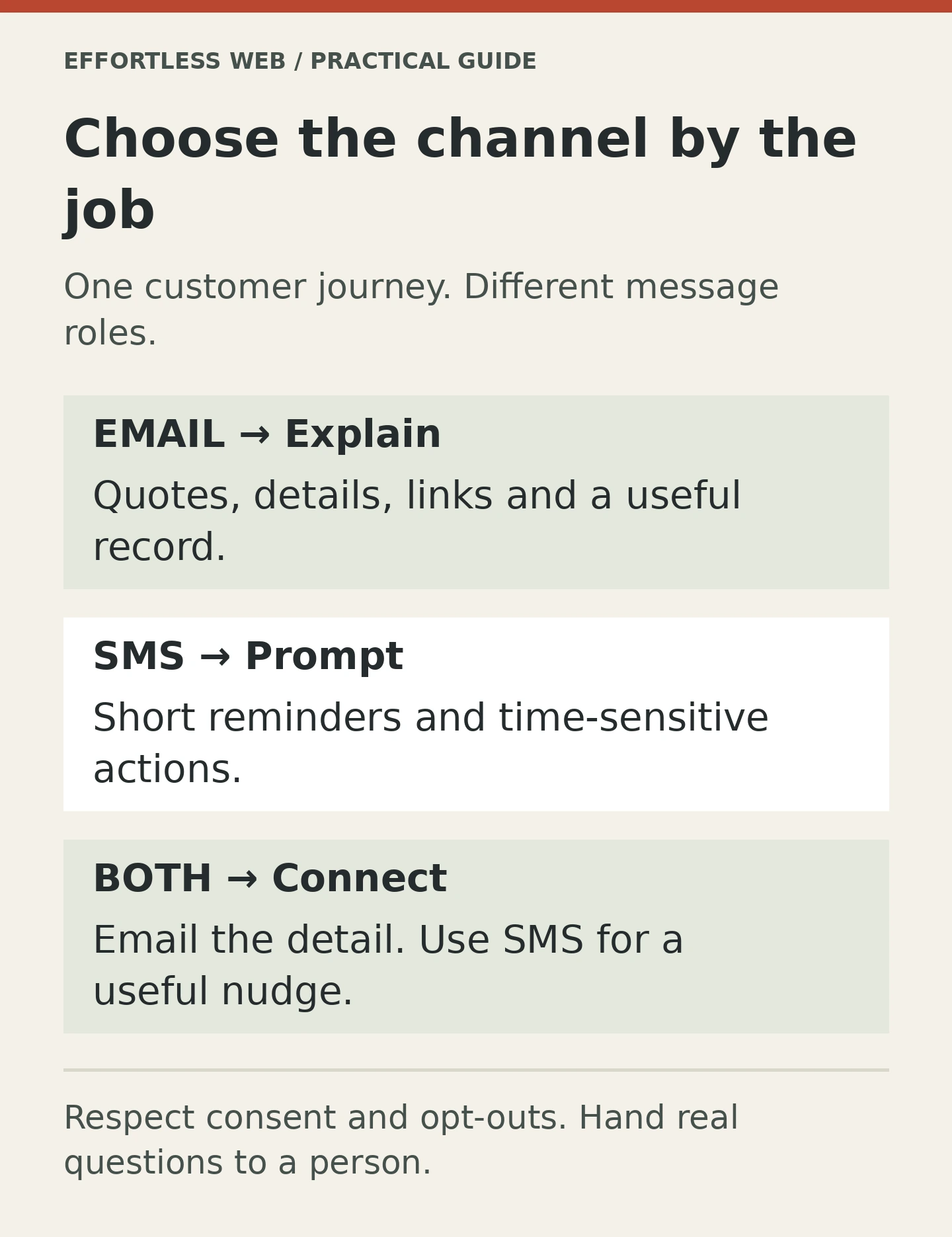
If you need to educate, explain, or keep a useful paper trail, start with email. If you need attention now, use SMS. If you need to do both, use email first and SMS as the nudge.
That simple rule works well for service businesses because most customer journeys are not one-and-done. A person asks for a quote, books an appointment, misses a call, reschedules, or needs a reminder before they commit. A good message system should follow that real behaviour instead of forcing everything into one channel.
If you want a fuller system behind the scenes, the Email & Customer Retention Marketing service is the main place to start. It is designed for follow-up, nurture, and repeat contact without turning your brand into a spam machine.
Use email when the message needs context
Email is the better choice when the message has more than one moving part. Quotes, service explanations, booking steps, onboarding notes, service comparisons, invoices, and monthly updates all fit here. You can add links, FAQs, files, and a clear next step without making the message feel crowded.
Email also gives people room to think. That matters for higher-consideration services where the customer is comparing options, checking prices, or asking someone else for approval. A short text message is not enough for that stage. An email can explain the value, answer obvious objections, and keep the conversation moving.
Mailchimp’s email marketing guidance and benchmark reports are useful reminders here: the basics still matter. Clear subject lines, good segmentation, and a sensible send cadence do a lot of the work before fancy automation ever enters the picture.
For businesses that want to set this up properly, the Automated Email Funnels page is the more specific fit.
Use SMS when speed matters more than detail
SMS is useful when the message is short and the timing matters. Appointment reminders, no-show follow-ups, booking confirmations, missed-call responses, and urgent rescheduling requests all fit this channel well. A text gets seen quickly, and that makes it useful when a delay would cost you the lead or the booking.
Twilio’s SMS marketing guidance makes the same basic point in different words: SMS is built for fast engagement and short actions. That does not make it a replacement for email. It makes it the right tool when the next step is obvious and does not need much explanation.
SMS also works well when people are busy. A tradesperson on a job, a parent in the school run, or a customer waiting for a quote is far more likely to notice a concise text than a long message buried in an inbox. That is why the channel is so useful for service businesses with urgent, real-world scheduling pressure.
If SMS is part of your mix, the SMS (Text) Marketing service is the relevant support page.
Why most service businesses need both
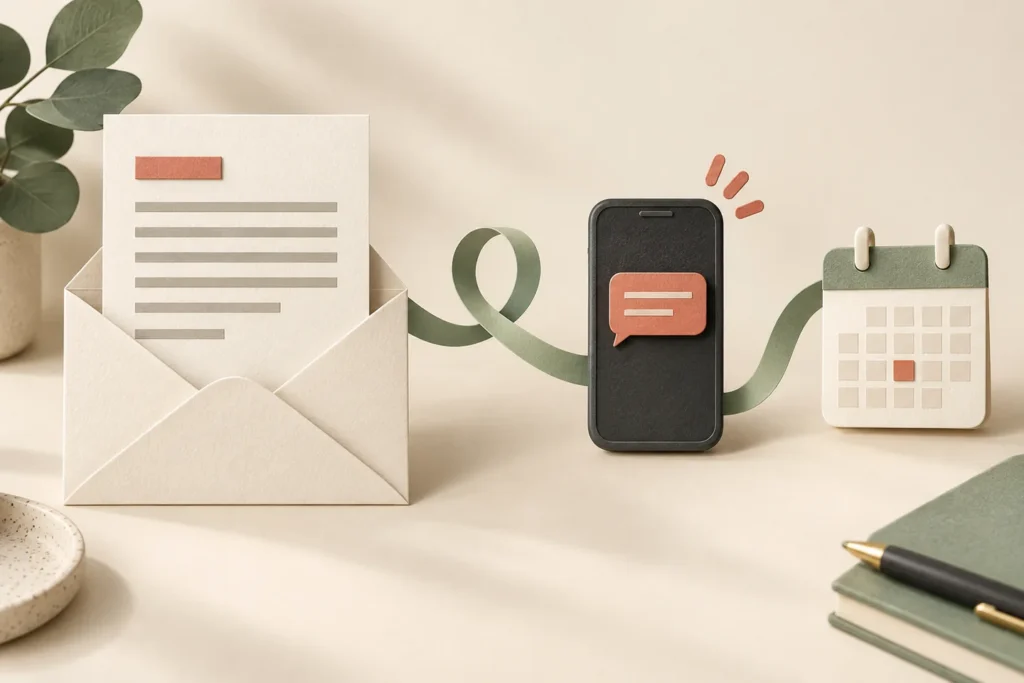
The best use of email and SMS is usually not either/or. It is sequence. Email handles the explanation. SMS handles the reminder. Email handles the quote follow-up. SMS handles the “just checking you saw this” nudge.
That combination matters because many service businesses lose leads in the gap between interest and action. The person fills out a form, sees the quote, gets distracted, and never comes back. A good sequence closes that gap without sounding pushy. It gives the customer a useful next step and gives your team a better chance of recovering the lead.
This is where your follow-up system matters more than the channel itself. If you have no process, even the best channel choice will not save you. If you do have a process, the right mix of email and SMS can do a lot of quiet work for you.
That is also why service businesses often need a broader retention setup, not just one-off campaigns. The point is not to send more messages. The point is to send the right message at the right time.
A simple decision rule you can actually use
- Use email when the message needs detail, links, or a record.
- Use SMS when the message needs speed and a clear action.
- Use both when the first message explains and the second message prompts action.
Here is the simplest version for a quote request. Send an email immediately with the request details, expected timing, and next step. If the lead has not replied and the job matters, send a short SMS later with one clear question or reminder. If the customer still does not respond, move them into a lighter nurture sequence instead of hammering them with the same message again.
That approach respects the customer’s attention and keeps your process tidy. It also makes it easier to see where the leak is: the subject line, the offer, the timing, or the follow-up itself.
What not to do
Do not text every update. Do not send long, clumsy SMS messages that should have been emails. Do not hide your consent or make the customer hunt for the unsubscribe option. And do not use automation to replace a real response when a real response is what the lead actually needs.
Good channel choice makes the business easier to deal with. Bad channel choice makes you feel busy while the lead cools off.
Need help setting up the mix?
If you are not sure whether your business should lean more on email, SMS, or a structured mix of both, start with the service pages below and build from there:
If you want help mapping the channels to your actual enquiry process, get in touch. A quick review of your customer journey usually shows where email should carry the detail and where SMS should do the nudge.